In April 2025, the Ministry of Culture learned that gem relics from Piprahwa, part of the sacred Piprahwa relics, were being auctioned by Sotheby’s Hong Kong. Around the same time, a grievance filed on the PMRP Portal by Prof. Naman Ahuja highlighted the urgency of stopping the auction and repatriating these sacred objects. Multiple media reports echoed the concern, seeking action from the Government of India. I joined as Secretary Culture on 21st April and was confronted with this issue in the very first week of my new assignment. This issue was highlighted by Hon’ble Culture Minister Shri Gajendra Singh Shekhawat as well when I went to call on him after joining.
I gathered background details, alerted all concerned agencies, including the Archaeological Survey of India (ASI) and the Indian Museum, Kolkata and began exploring legal options. The relics in question included bone fragments, soapstone and crystal caskets, a sandstone coffer, and offerings such as gold ornaments and gemstones. Excavated in 1898–99 by William Claxton Peppé from the Piprahwa Stupa, at the birthplace of the Buddha, the relics bear an inscription in Brahmi script identifying them as relics of the Buddha, deposited by the Śākya clan.
While the part of the relics and reliquaries including jewel relics were transferred to the Indian Museum, Kolkata in 1899 and are classified as ‘AA’ antiquities under Indian law, the bone relics were gifted to the King of Siam. A selection consisting of precious jewels and gemstones remained in Mr. Peppé’s possession which he took away to Britain. His great-grandson, Chris Peppé, had now put these gem relics up for auction.
A Race Against Time
We assumed responsibility and adopted a whole-of-government approach. I convened a high-level review meeting to frame a strategy. Earlier, Hon’ble Minister of Culture Shri Gajendra Singh Shekhawat had raised the matter with Rt Hon Lisa Nandy, UK Secretary of State for Culture, Media and Sport, during a bilateral meeting. He emphasized the sacred, cultural, and religious significance of the relics and pressed for urgent intervention. UK Secretary of State later responded and expressed UK Government’s inability to intervene.
Auction was scheduled at 10 am Hongkong time on 7th May. On 5th May, I established a war room in the Ministry of Culture with officers from MEA, ASI, Indian Museum, and domain experts including Naman Ahuja (Art Historian) and the coordination was given to Shah Faesal a young IAS officer working with me. The challenge was formidable: the auction was outside India’s legal jurisdiction, time was critically short, and the matter was deeply emotional for India and millions of Buddhists worldwide. Stopping the sale of India’s sacred spiritual heritage was a matter of national pride.
Issuing a Strong Legal Notice
It was decided to serve a legal notice to Sotheby’s Hong Kong. Prepared in-house by a team led by Shah Faesal and supported by Naman Ahuja, the notice cited Indian laws and international conventions including UNESCO 1970, UNIDROIT 1995, and the ICOM Code of Ethics among other international laws and conventions. It demanded immediate cessation of the auction, a public apology, full disclosure of all documentation, and details of remaining items. It warned that non-compliance would trigger legal action and global diplomatic repercussions.
To serve the notice, the Ministry had to scale many obstacles to obtain the email addresses of Chris Peppé and authorized Sotheby’s representatives, because the auction webpage did not provide contact details. We also consulted Ms Kiran Nadar for approaching the right people at Southeby’s.
Financial Intelligence Unit of India was roped in, leveraging my previous role as Director FIU, and a notice for stopping auction was issued under the EGMONT protocol to FIU Hong Kong on the same day.
MEA was also requested through its Europe West and East Asia divisions to ensure that embassies in the UK and Hong Kong followed up. By then, global media including The New York Times, The Guardian, and BBC had picked up the story, amplifying the stance taken by the Ministry of Culture, Government of India.
First Breakthrough
Following intense pressure, Sotheby’s representatives joined a crucial discussion with us on 6th May. I made a strong case to halt the auction. Sotheby’s argued that since the items left India during the pre-independence period, India had no claim. We countered forcefully, explaining the sensitivities around colonial-era dispossession and the global momentum for repatriation of cultural heritage an area which has global acceptance. Southeby’s was also reminded about their business interests in India and how they can be adversely affected due to wrong perception created on account of such irresponsible act. It was also empasised that under both Indian and international law, these sacred śarīra-dhātu of the Buddha could not be treated as mere objects of commercial sale.
We had made all the possible efforts by the evening of 6th. I got an early morning email at about 5 am India time on 7th May from the representative of Southeby’ that they have decided to postpone the auction. It was a major relief and success of our strategy, yet the real mission had only begun: bringing the relics back home swiftly.
As a first step, we insisted on an examination of the Piprahwa gems. On 12 May 2025, Sotheby’s informed the Ministry that the Peppé family had consented to a government delegation inspecting the items.
A three-member delegation visited Hong Kong on 21–22 May 2025 to examine the relics:
- Prof. Alok Tripathy, Additional Director General, ASI
- Dr. Sayan Bhattacharya, Deputy Director, Indian Museum
- Dr. Shamoon Ahmed, Assistant Superintending Archaeologist, ASI
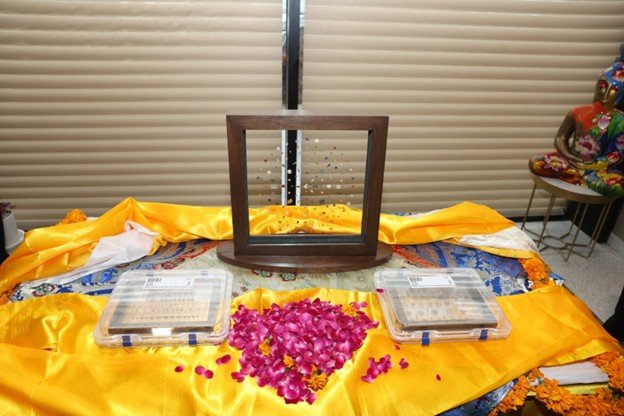
They examined 349 sacred gems stored in three wooden-framed boxes with transparent coverings. Preliminary observations showed strong alignment with the 221 items excavated in 1898 and housed in the Indian Museum, confirming their authenticity and sacred provenance.
We started looking at various options for securing repatriation after the provenance was established. There were three options under consideration. One was to use legal channel and force repatriation through court procedure. International diplomacy had already failed. This option was examined and we could not find any credible legal method for repatriation of relic jewels which were allowed to be taken away during the colonial rule from India. The second option was to offer some amount of compensation from Government exchequer which was also very difficult as the decision to pay and the amount to be paid could not be objectively determined. Third option was to have a public private partnership and encourage an Indian Philanthropist to participate in bringing relics back to India.
While the message spread across the globe, Sotheby’s conveyed to us that an Indian philanthropist wished to acquire the relics and return them to India. We agreed that if an Indian citizen wished to repatriate them as a matter of civic responsibility, the proposal could be examined. We sought details of the philanthropist.
A Decisive Strategy
We organized a tripartite meeting in which Indian Philanthropist (Pirojsha Godrej), Southeby’ representatives and Chris Pepe’s agent participated. I did not seek any financial details but stressed on the following conditions:
- The Jewel relics will come to India and will placed in Government’s possession.
- These relics will be inalienable, that means that they cannot be sold in future and will remain in India.
- Larger part of relics will remain with Government Museum for public display for a period of 5 years.
- On the expiry of the period of 5 years they will remain in public display in a museum established by the private partner with right of calling them for display in national interest in India and abroad with the Government.
- Any exposition abroad will be done by the Government or with express approval of the Government
The consensus: the most desirable outcome was immediate repatriation, facilitated by an Indian citizen. It was imperative to move quickly, as intelligence suggested the relics could be sold to an organization in Southeast Asia or another country seeking to appropriate the Buddha’s legacy for geopolitical gain.
It was eventually decided to sign an MoU with the Godrej Industries Group, acknowledging their civic commitment enshrining the aforementioned conditions. Under the MoU, the relics would be displayed first at the National Museum, where the larger set of gem relics would remain for five years. Godrej Industries proposed to create a dedicated museum thereafter for public viewing and preservation as part of their commitment.
A Historic Homecoming
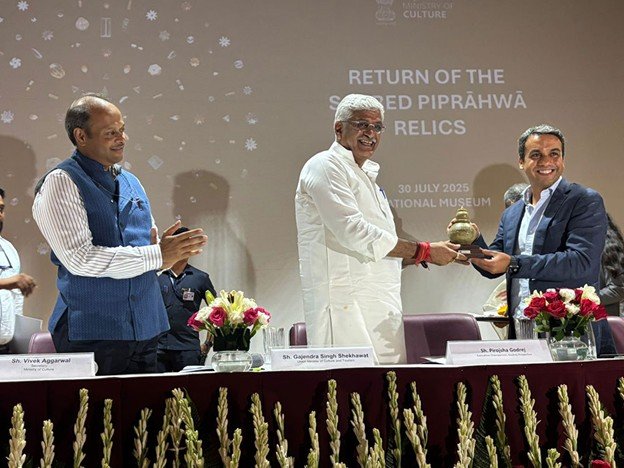
Soon after the MoU was signed, the Ministry received confirmation that Shri Pirojsha Godrej had taken possession of the relics in Hong Kong. It was a moment of immense relief. The next task was immediate transportation. With support from Indian Customs, AAI, BCAS, and allied agencies, the relics were flown out overnight. After a short transit in Mumbai, they arrived in Delhi aboard a chartered flight.
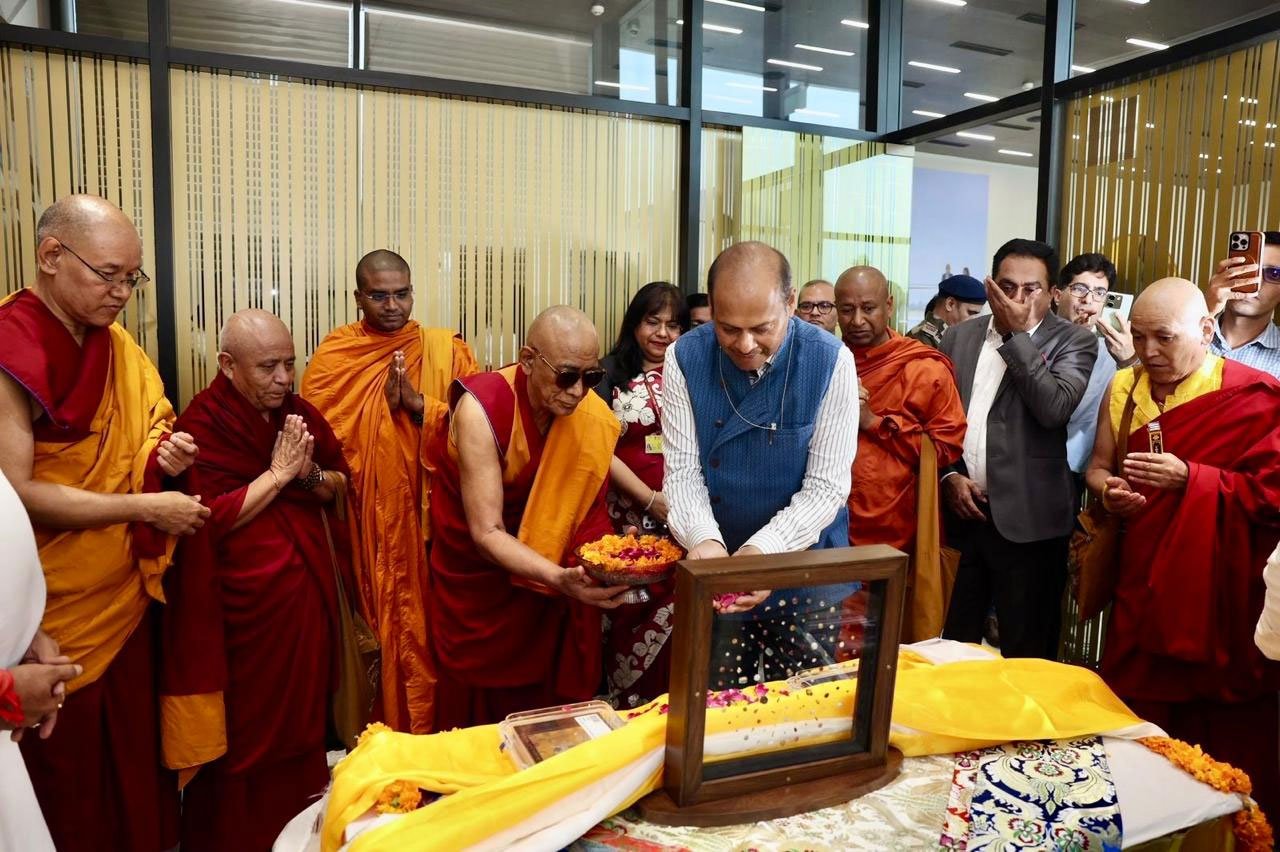
On 30 July 2025, the gem cases were ceremonially received at Palam Airport by Hon’ble Culture Minister Shri Gajendra Singh Shekhawat and myself. Buddhist monks chanted prayers, filling the air with spiritual resonance. The Hon’ble Prime Minister Narendra Modi called it “a joyous moment for India’s heritage, that would make every Indian proud.” Throughout this process Hon’ble Prime Minister Shri Narendra Modi and his office provided guidance and approval which resulted in historic repatriation under a PPP mode.
Global media hailed the return as a landmark moment in cultural restitution.
- Gulf News described it as “historic and profoundly emotional.”
- Artnet News called it the triumphant end to a controversial auction saga, noting that the relics were returning home after 127 years.
- BBC and The New York Times highlighted its archaeological and diplomatic significance, framing it as a major milestone for India and global Buddhist heritage.
Celebrating a Global Spiritual Moment
Upon arrival, it was decided that a major commemorative event would be organized, inviting Buddhist leaders and Heads of State from around the world. The sacred relics from the Indian Museum would be displayed alongside, reuniting them after over a century. A specially curated international exhibition is being prepared at Qila Rai Pithora, New Delhi marking the first-ever public display of the repatriated relics along with the Indian Museum collection.
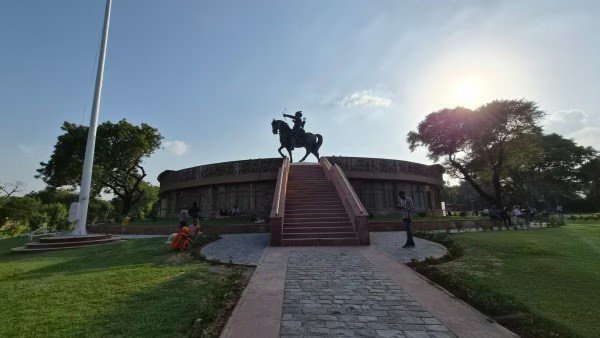
(Image: Qila Rai Pithora New Delhi – site of the upcoming International Exposition on Piprahwa gem relics).
A New Model for Cultural Repatriation
The Piprahwa saga affirms India’s identity as the land of Buddha, not yuddha (war). This mission required audacious decisions, rapid action, legal innovation, and partnerships without precedent. Inspired by the vision of the Hon’ble Prime Minister, Shri Narendra Modi, India demonstrated what bold governance can achieve.
This victory transcends national boundaries. As the land of Buddha, Bharat has reaffirmed its role as custodian of a universal spiritual legacy. The Piprahwa Model swift decision-making, global advocacy, and ethical partnerships now stands as a blueprint for post-colonial cultural reclamation.
The message is clear. India does not merely request its heritage;
we demand it, defend it, and bring it home.